Loading...
IBM-UCL AI Islands
Project Manager & Team Lead
Technologies
C#.NET MAUIPythonFastAPIAIModel ChainingQuantisationHugging FaceIBM Watson

Overview
The IBM-UCL AI Islands project was a collaborative initiative designed to lower the barriers to AI adoption for smaller businesses and educational institutions. The project delivered a scalable, offline AI management platform that prioritised data privacy, affordability, and ease of integration. The system featured an intuitive interface for managing and running open-source Generative AI models—particularly for text generation and chatbot use cases—ensuring users could access powerful AI capabilities without relying on cloud infrastructure. Developed by a four-member team, the platform compiled an extensive index of offline AI models spanning natural language, visual, and audio domains, with optional integration of IBM Watson's online services for advanced tasks. The backend, built with Python and FastAPI, enabled seamless downloading, configuration, and management of models from the Hugging Face ecosystem. Key features included a model experimentation playground, model chaining for complex workflows, robust API integration for external systems, and comprehensive local data management to guarantee privacy and security. Through extensive testing and user feedback, the project demonstrated its effectiveness in making advanced AI tools accessible to a wide range of users, from classrooms to small enterprises. The outcome was a user-centric, adaptable platform that significantly reduced the technical and financial challenges typically associated with AI implementation.
Project Gallery

AI Index main viewFiltering AI models in the indexOffline text generation model viewModel informationDownload view of a modelApp navigationLibrary pageHardware informationAPI access interfaceConfiguration screenInference interfacePlayground for testing modelsAdding models to playgroundChain configurationPlayground inferencePlayground API
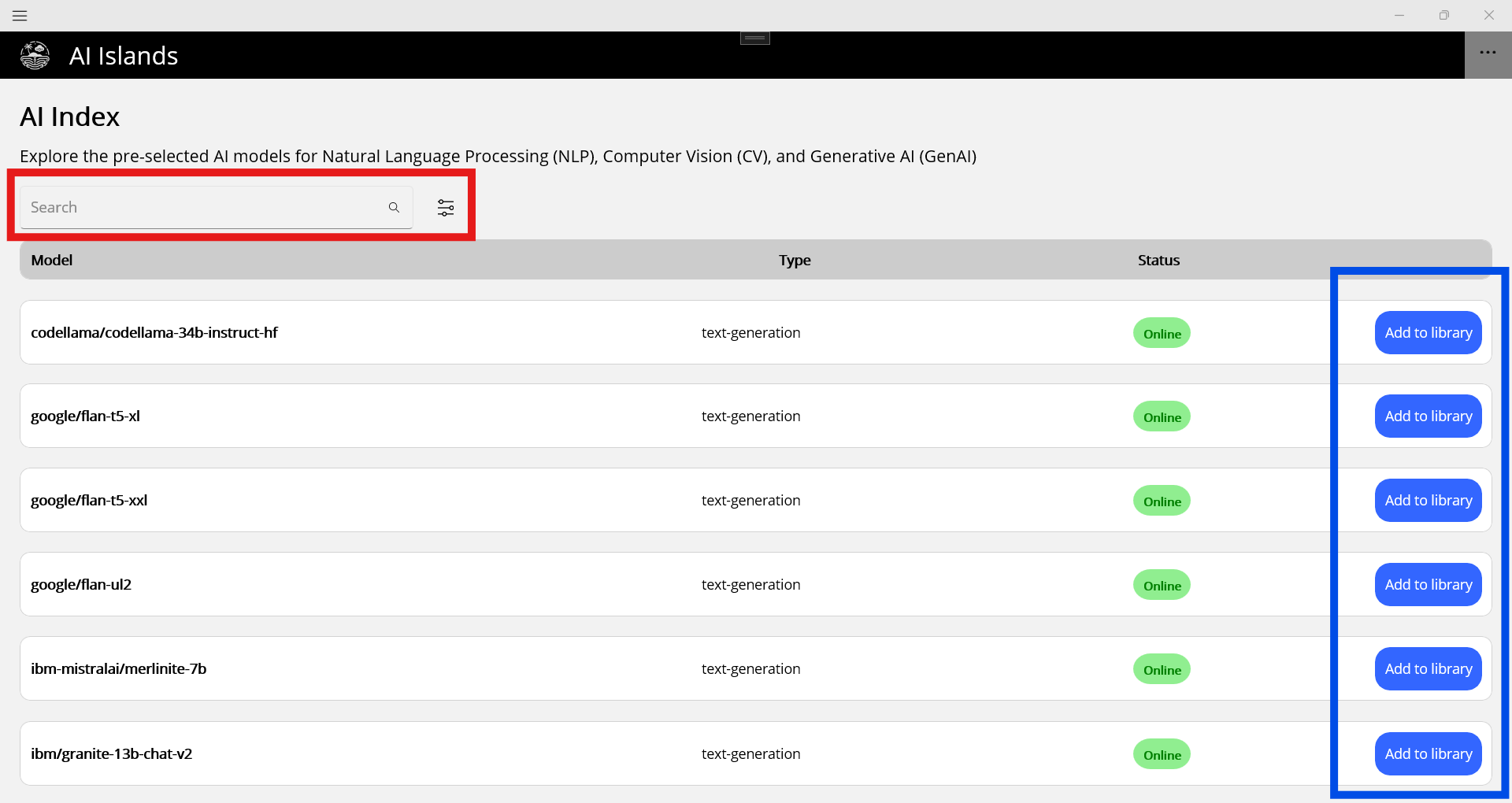
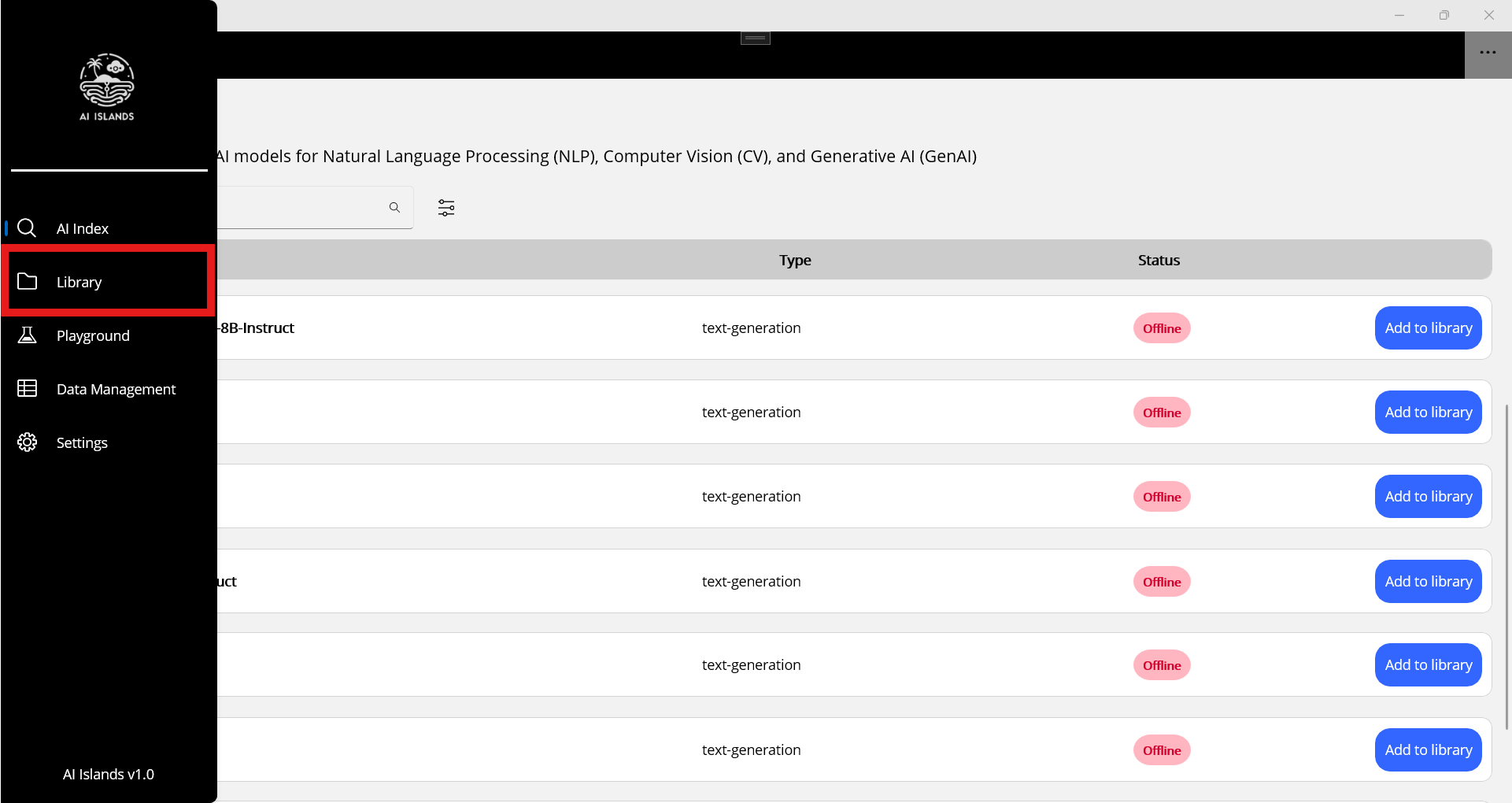
1 / 16The AI Index, highlighting the included search, filter and add to library buttons..
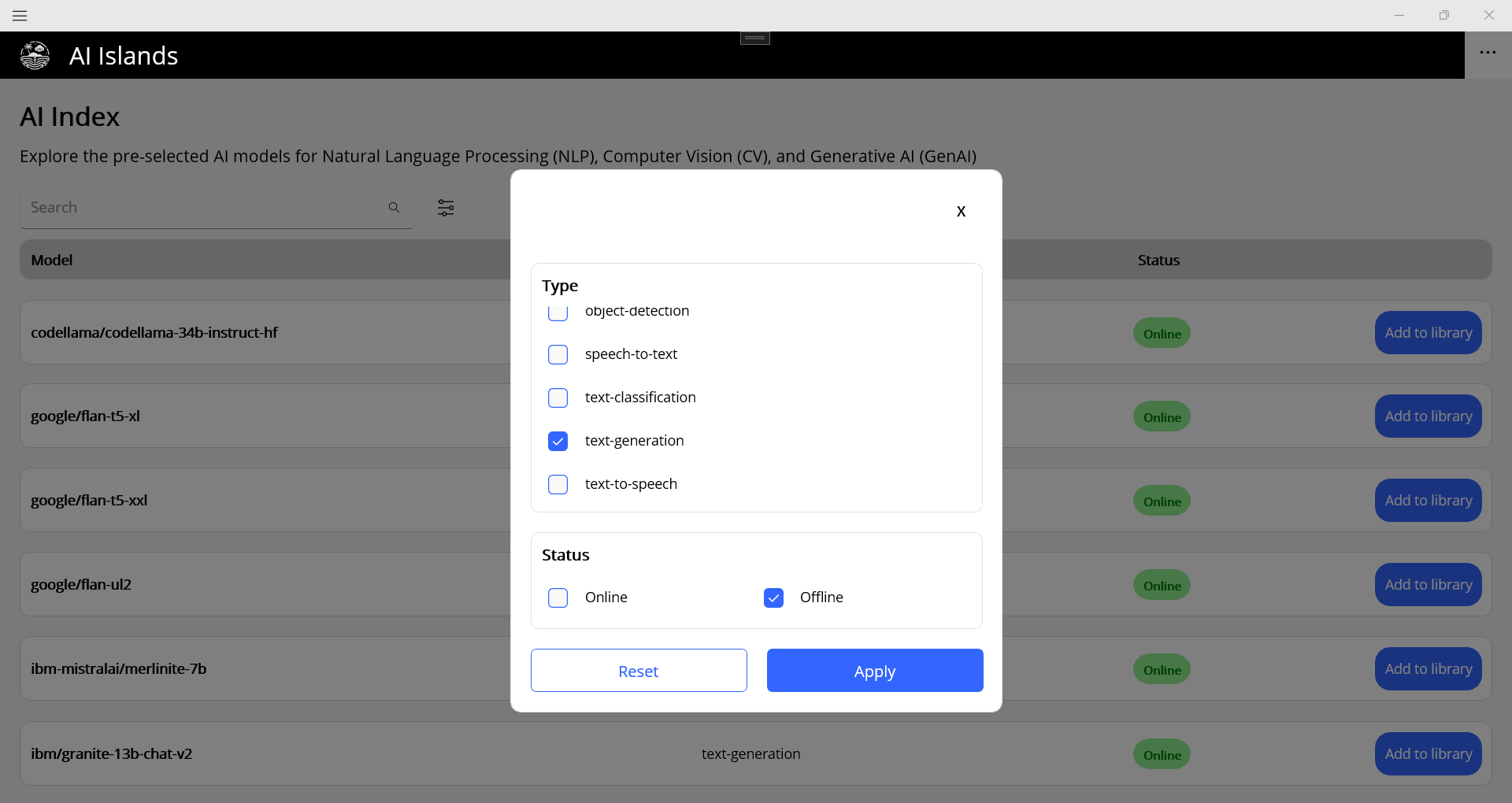
Advanced filtering options allow users to quickly find models by type and offline status.
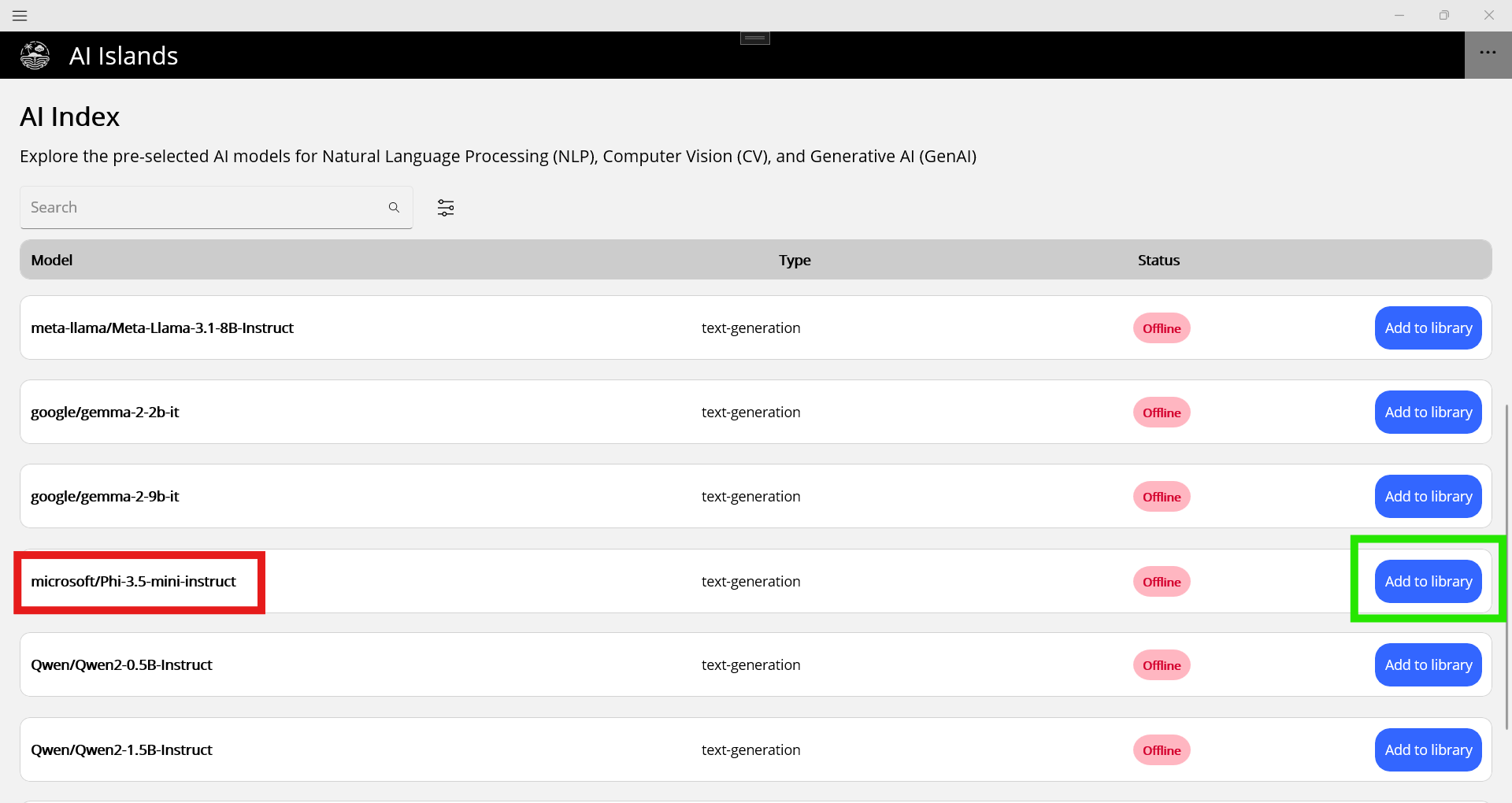
The AI Index showing all available offline text-generation models.
Comprehensive metadata display including model architecture, training dataset, and usage examples.
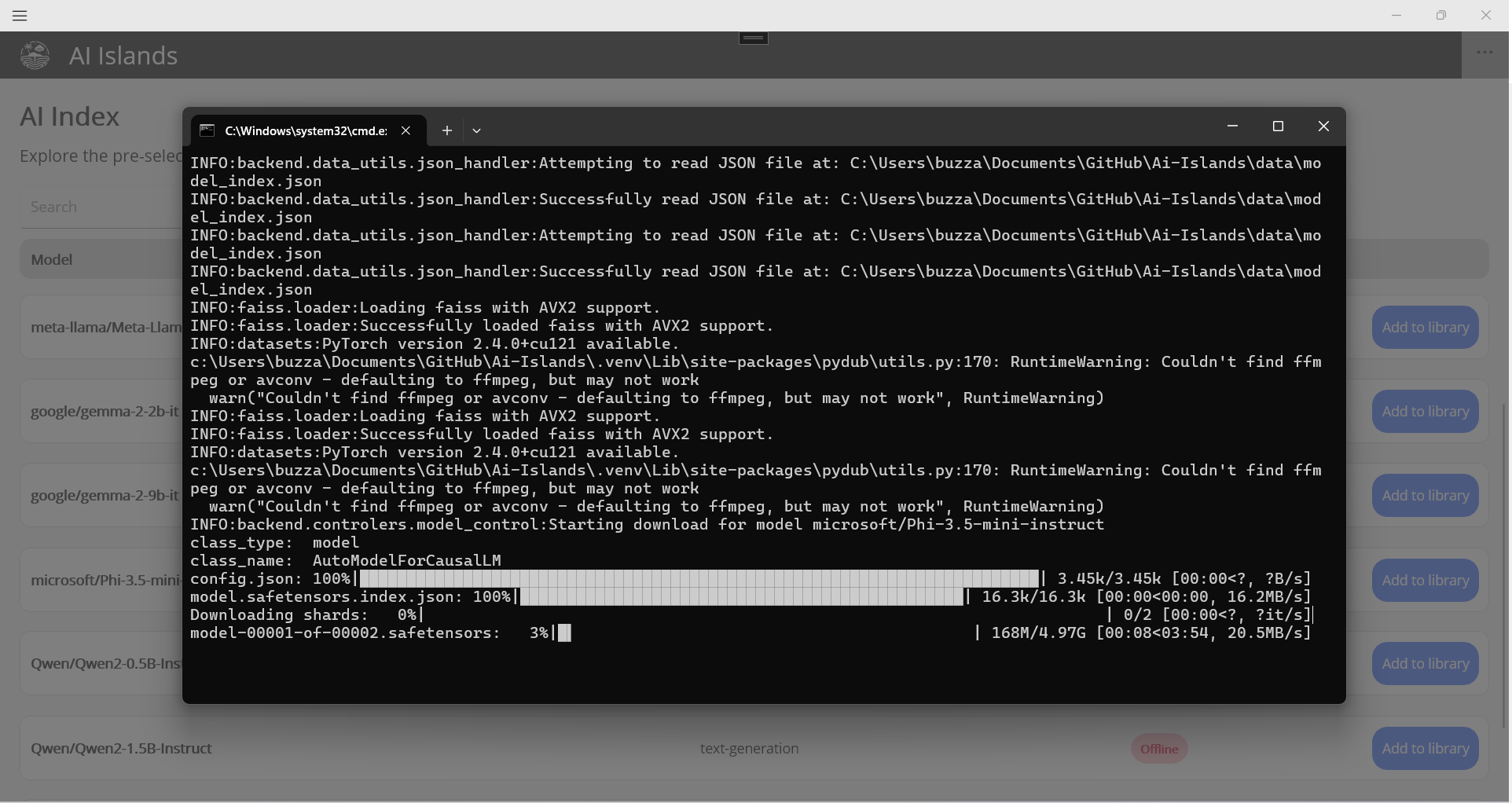
Model download terminal showing the model download progress.
Side navigation bar, providing access to the AI Index, Playground, and Library.
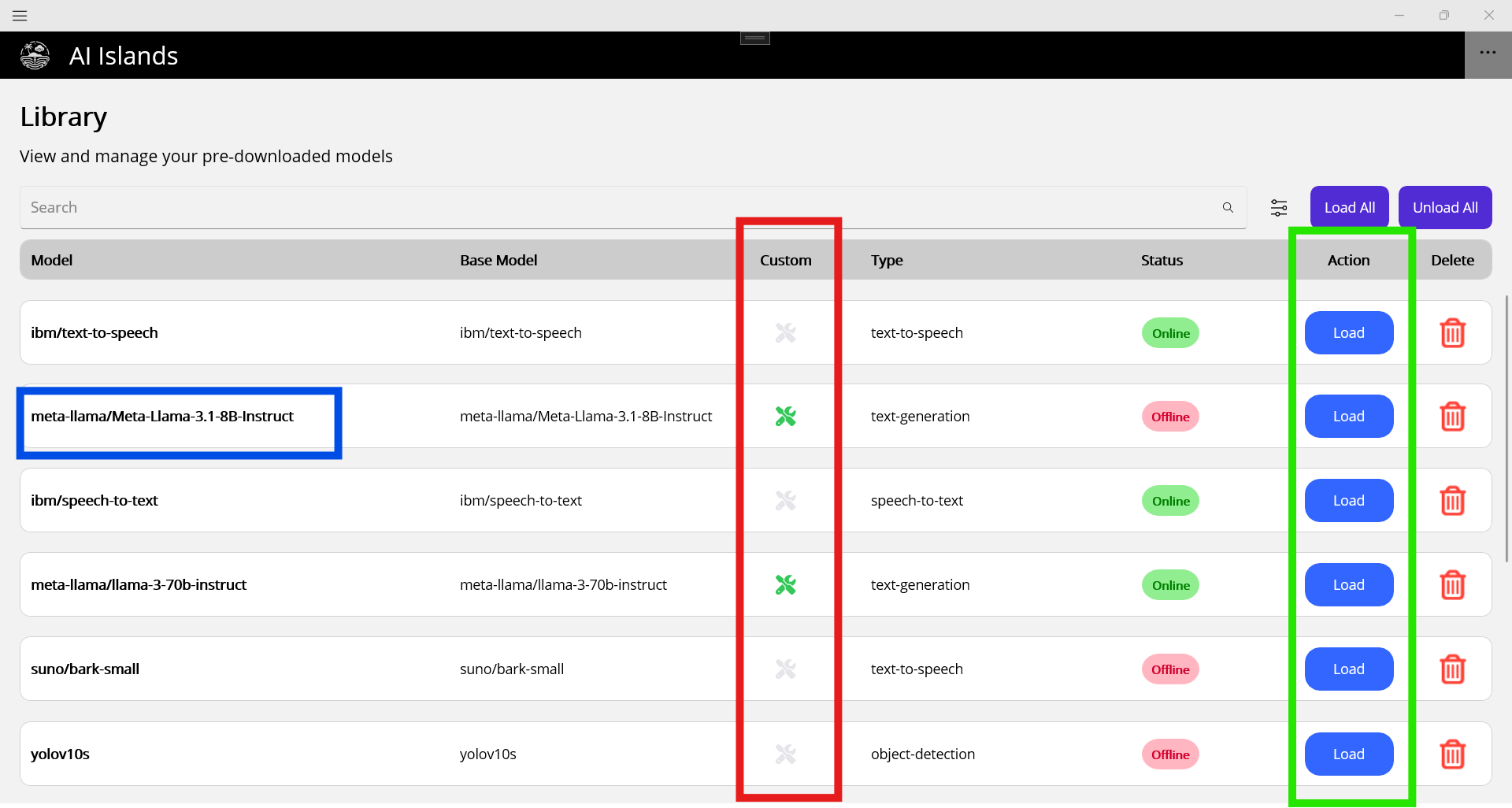
The Model Library page, showing all downloaded/added models and actions to manage them.
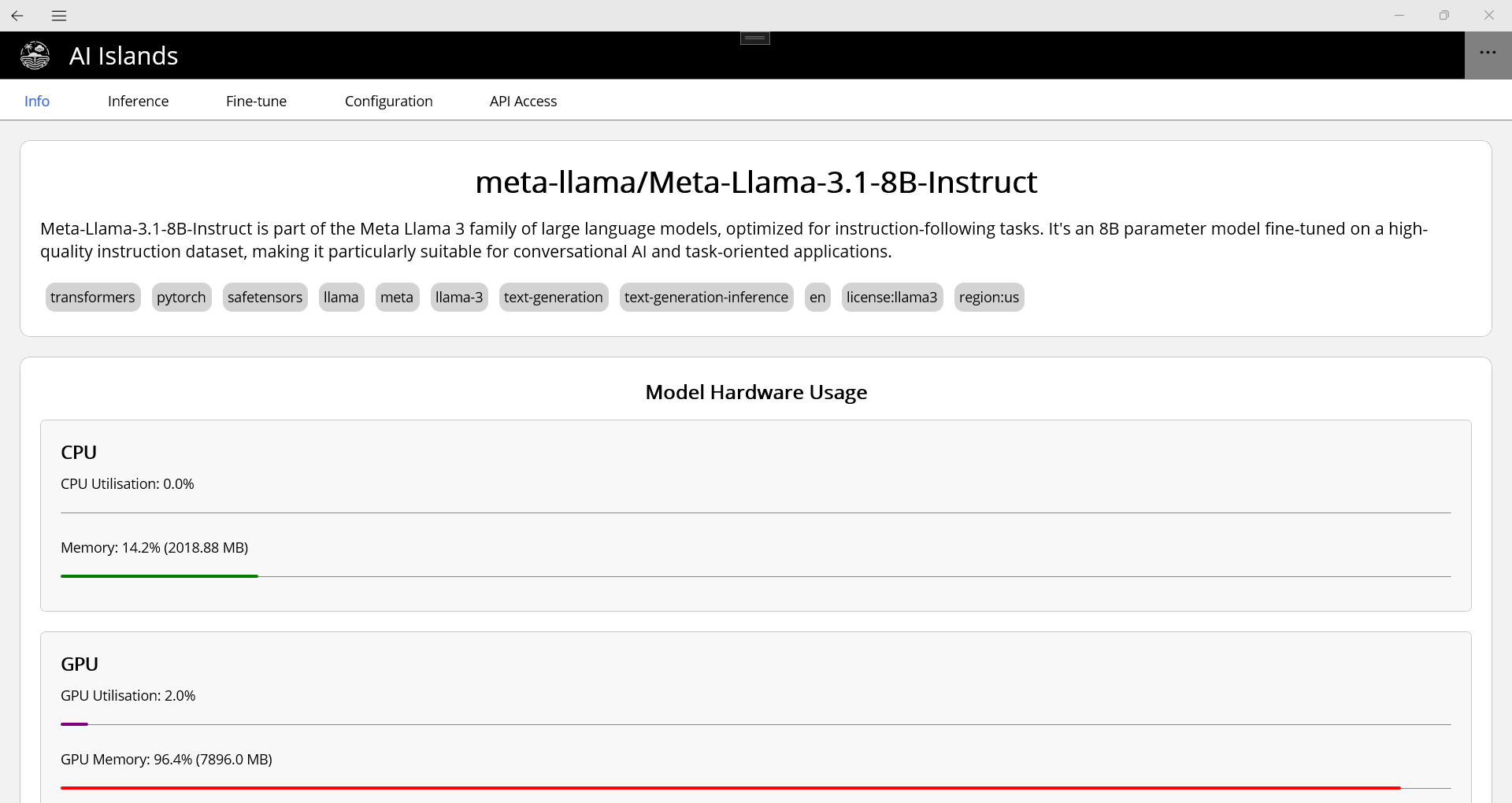
System hardware usage for a loaded model.
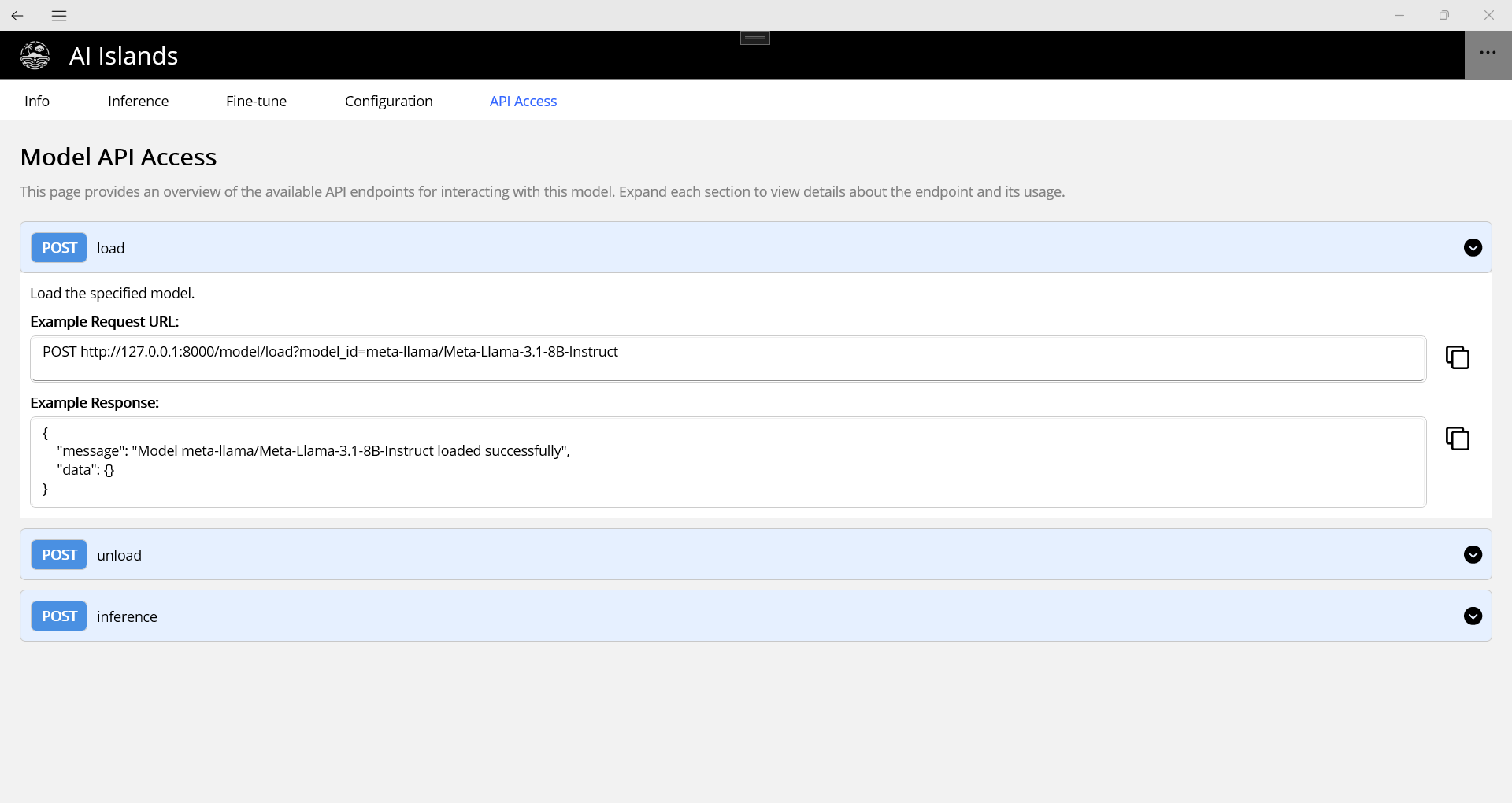
API configuration panel allowing developers to integrate AI Islands models with other applications.
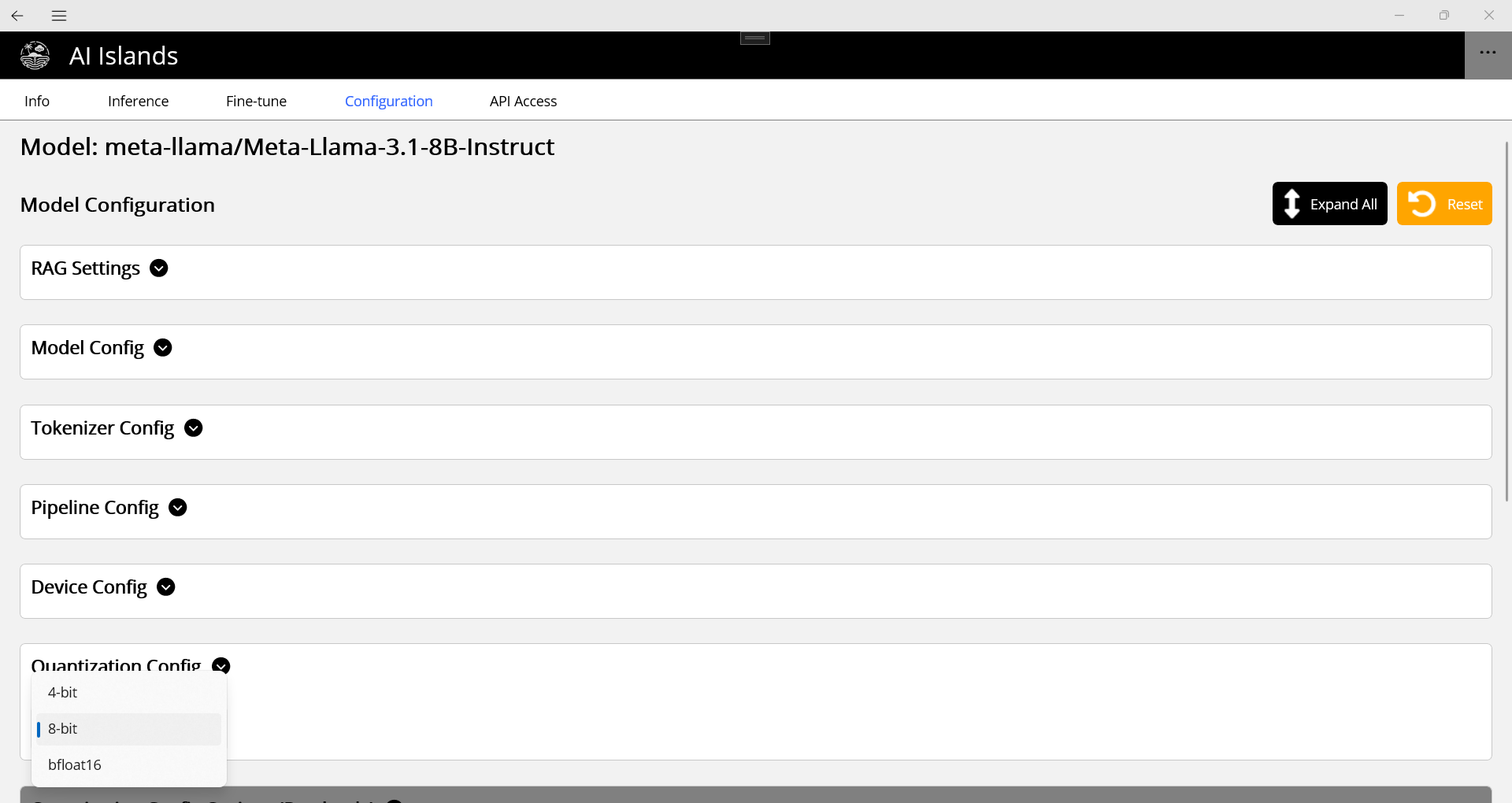
Detailed model configuration options including quantisation and inference parameters.
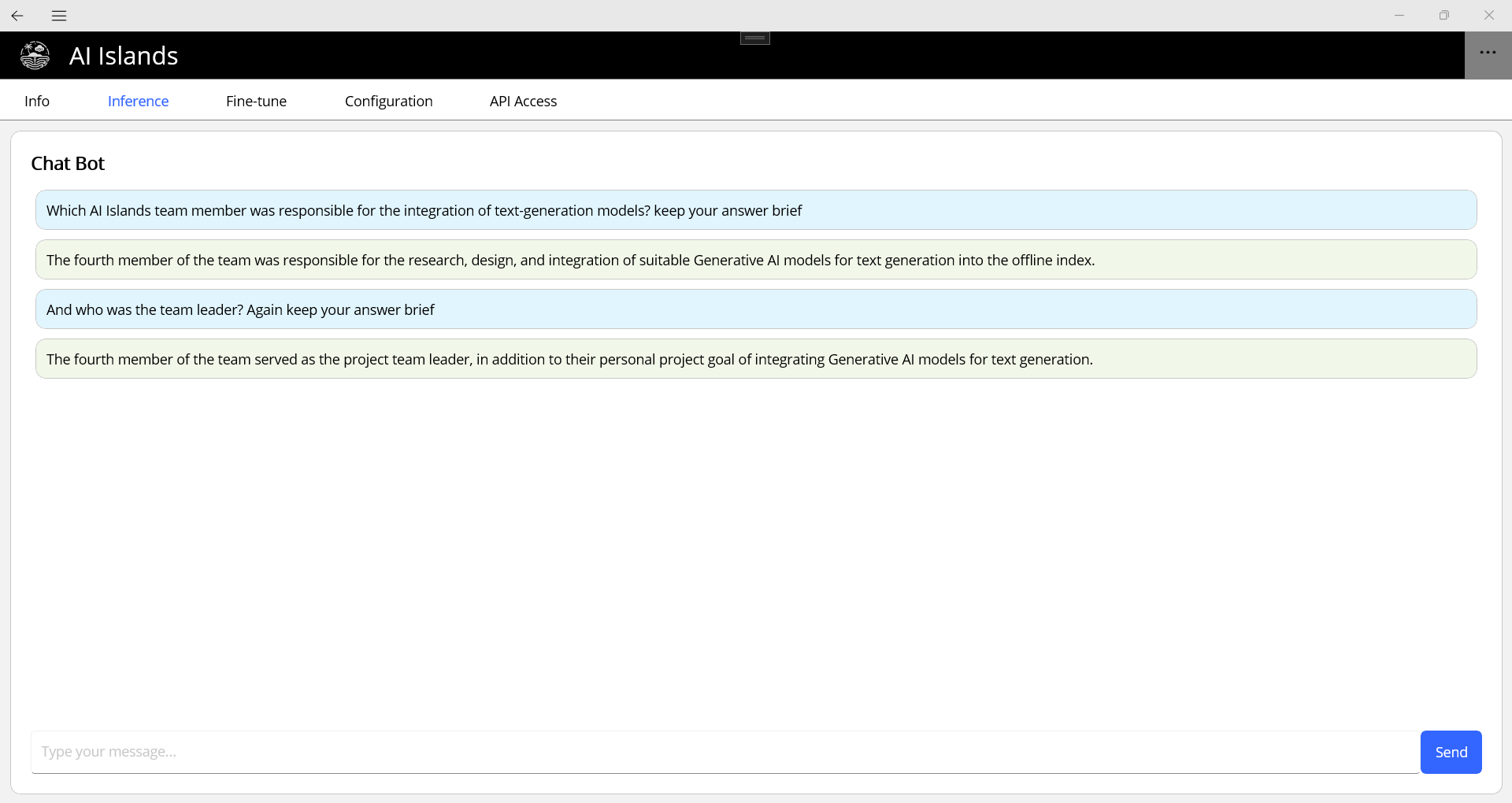
Built-in inference page, allowing direct model testing.
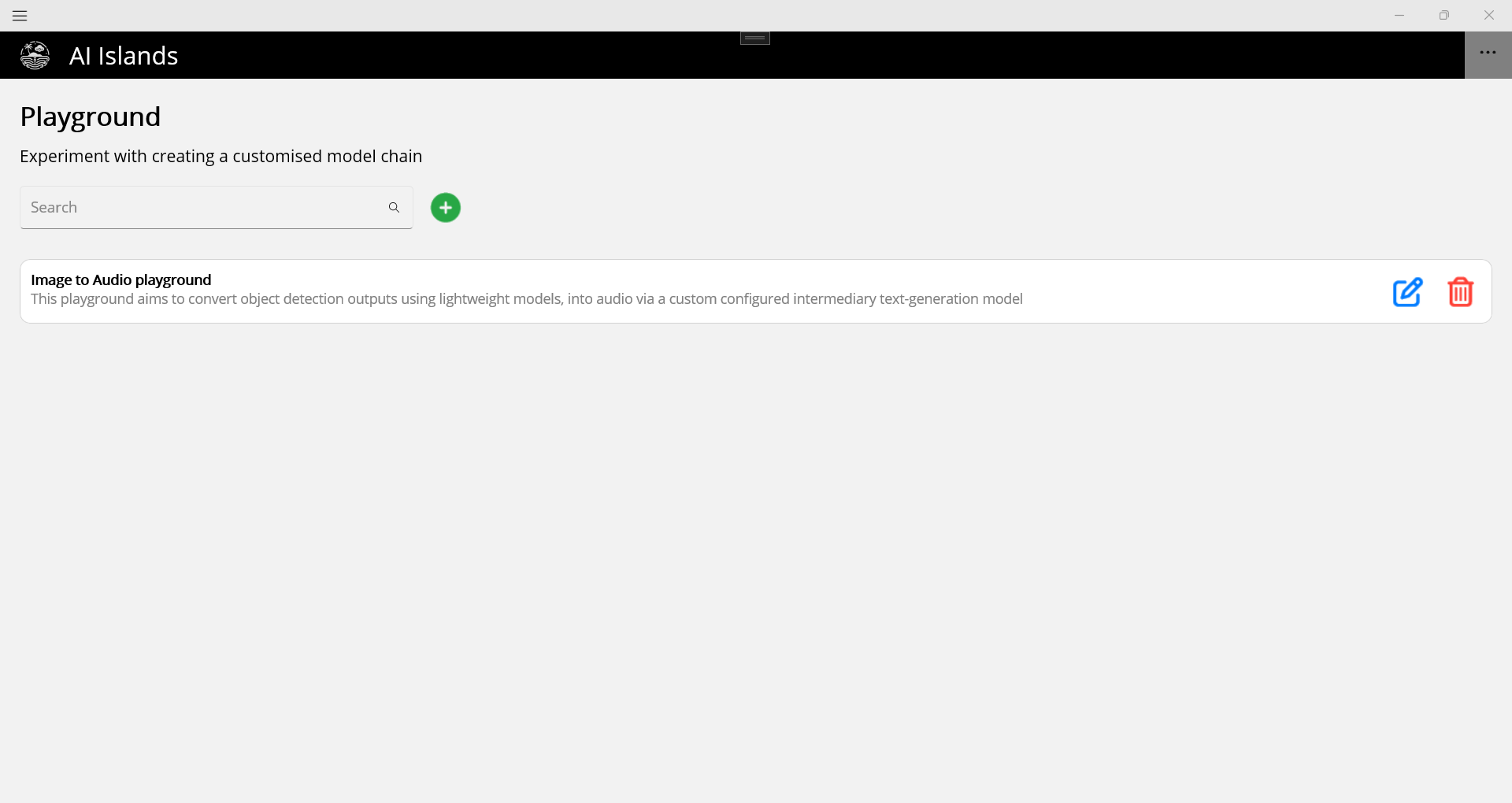
Playground page, displaying a list of available playgrounds.
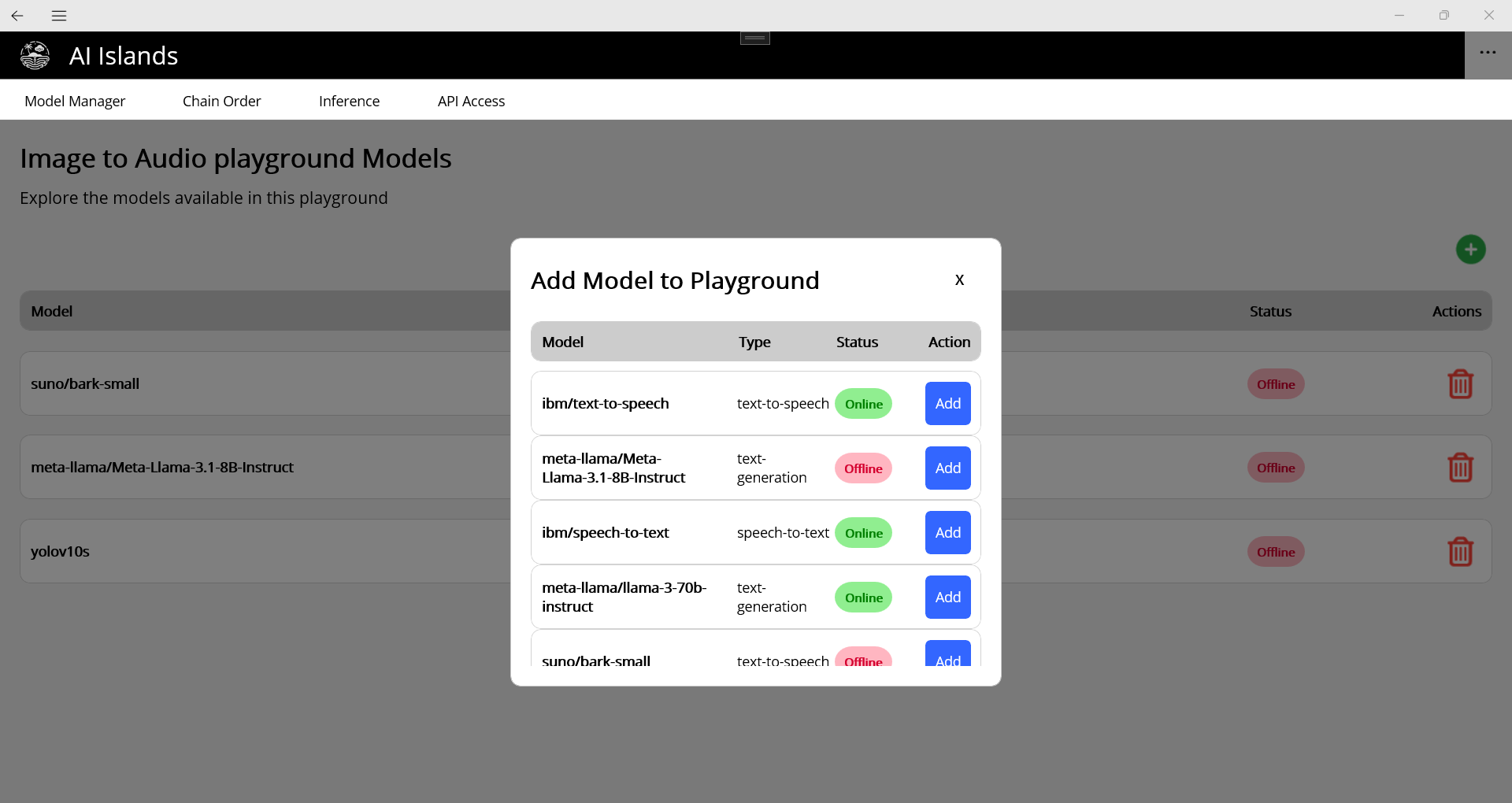
Model manager page, allowing users to add/remove models from the playground.
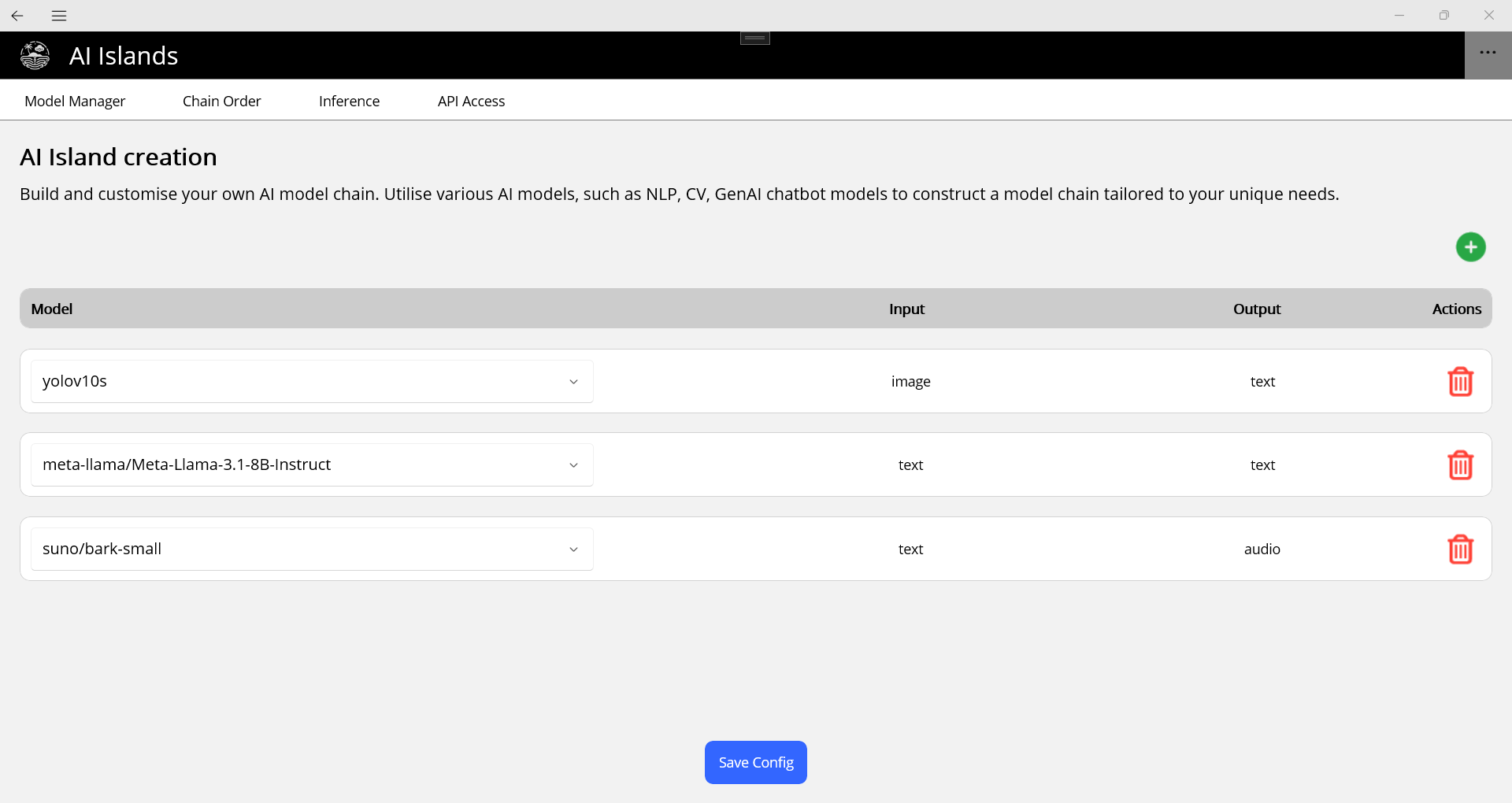
Model chaining configurator for creating complex AI workflows by connecting multiple models.
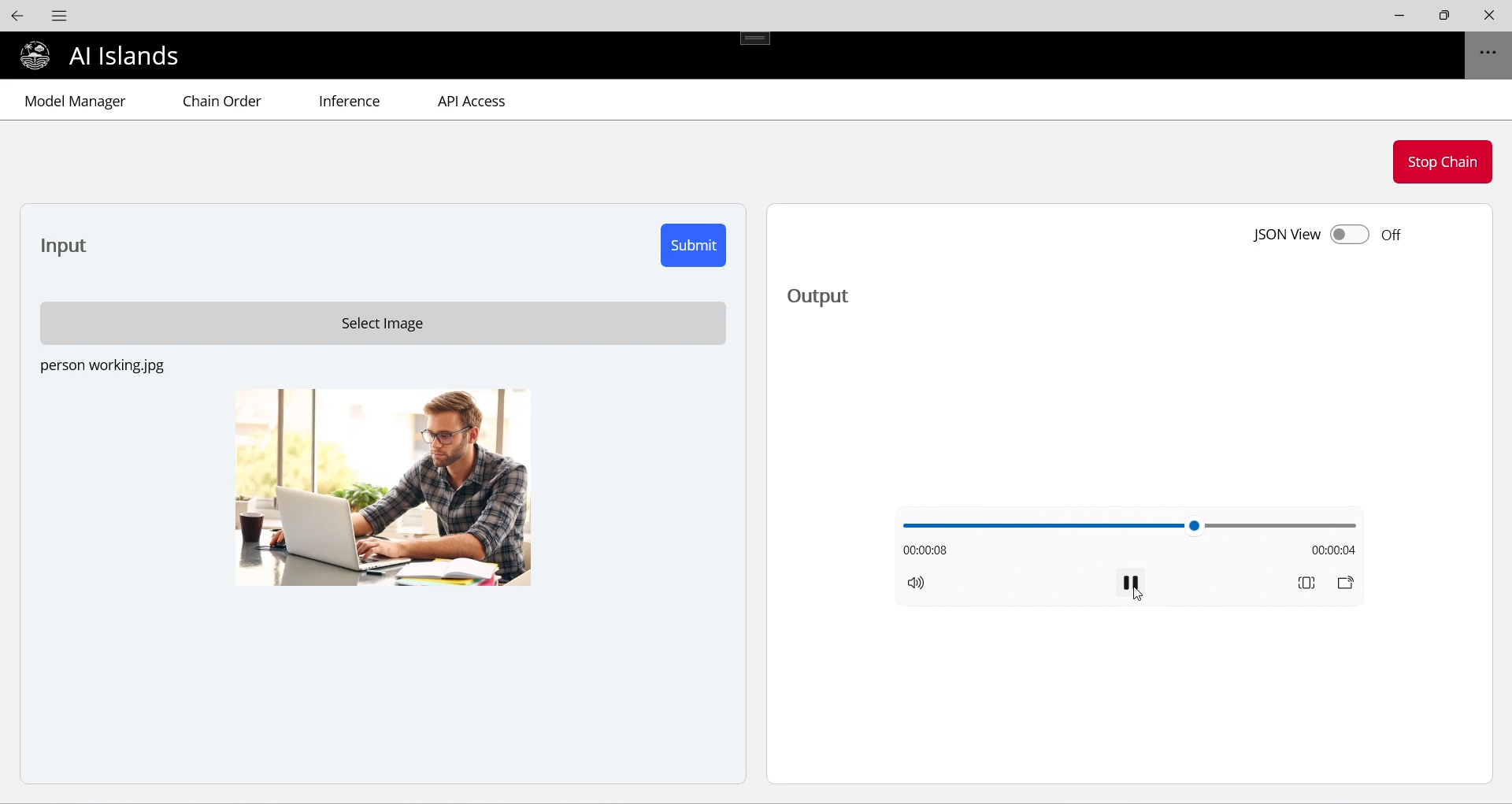
Inference page, showing the results of inferencing a playground chain.
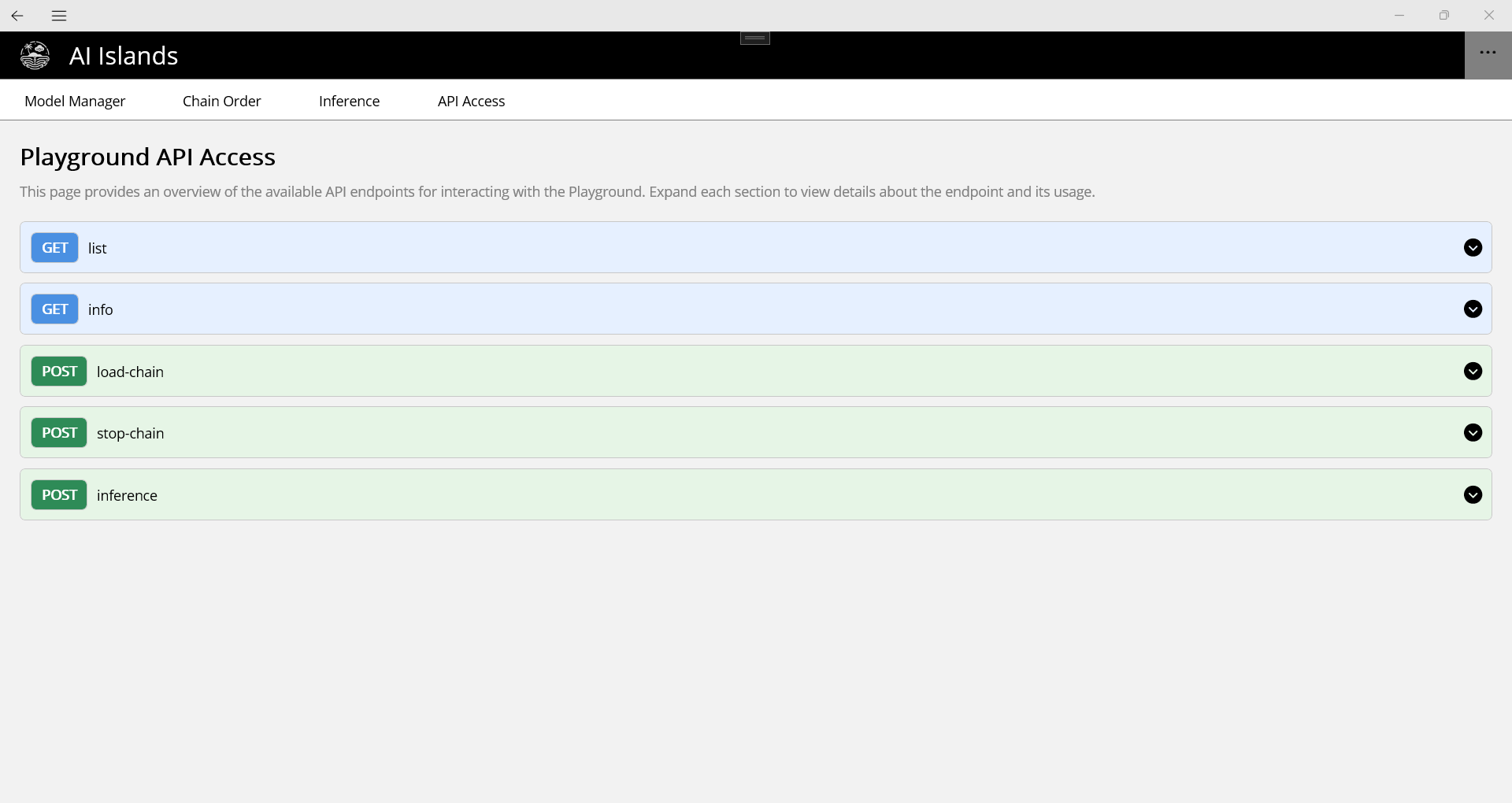
Playground API access for integrating with external applications through REST endpoints.
Project Demo
Key Technologies
Python & FastAPI Backend
Developed a robust backend using Python and FastAPI, enabling fast, scalable, and user-friendly API interactions for managing AI models.
Hugging Face Transformers Integration
Integrated the Hugging Face Transformers library to facilitate efficient downloading, configuration, and management of open-source Generative AI models.
Local Data Management
Implemented comprehensive local data management, ensuring all AI models and user data remain offline to guarantee privacy and security.
Model Chaining & Playground
Provided a flexible playground and model chaining system, allowing users to experiment with and combine multiple AI models for customized workflows.
IBM Watson Services (Optional)
Enabled optional integration with IBM Watson's online services to complement offline models for advanced or computationally intensive tasks.
Challenges & Solutions
Infrastructure Costs
Addressed high infrastructure costs by developing an efficient offline AI system capable of running on standard hardware, eliminating the need for expensive cloud resources.
Technical Complexity
Overcame the complexity of AI model integration and management by designing an intuitive user interface and providing comprehensive API endpoints for seamless external integration.
Data Privacy
Ensured user data privacy and security by keeping all AI models and related data entirely offline, giving users full control over their information.