Loading...
Mental Health Management Platform (MHMP)
Software Engineer & System Analyst
Technologies
UMLOOA/OODUse Case AnalysisNHS Integration DesignSystem ArchitectureHealthcare IT
Overview
The Mental Health Management Platform (MHMP) was a pre-implementation software engineering project focused on designing a comprehensive solution to address significant shortcomings in existing electronic healthcare record systems for mental health care contexts. The project concentrated on rigorous software engineering methodologies including UML modelling, Object-Oriented Analysis (OOA), Object-Oriented Design (OOD), and use case analysis. The project delivered detailed design specifications for a system that would streamline operational workflows, enhance communication, and support coordinated patient care across different settings, including community and hospital environments. Through extensive use case analysis, I mapped out how various stakeholders (patients, psychiatrists, therapists, nurses, pharmacists, and administrative personnel) would interact with the proposed system. Key proposed functionalities included a robust appointment management system, accessible and secure clinical notes, prescription management with pharmacist involvement, and an internal messaging system for healthcare professionals.
Project Documentation
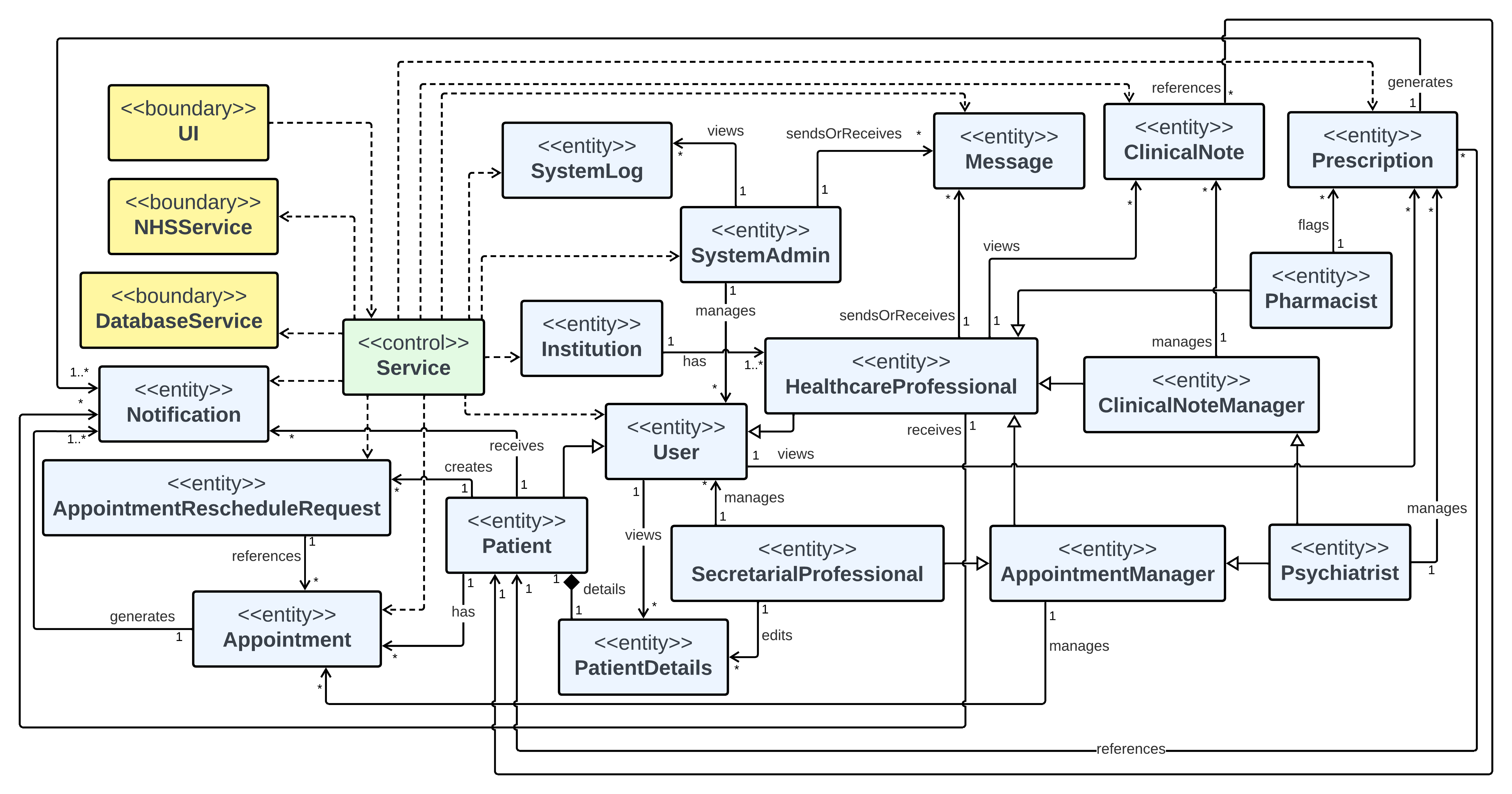
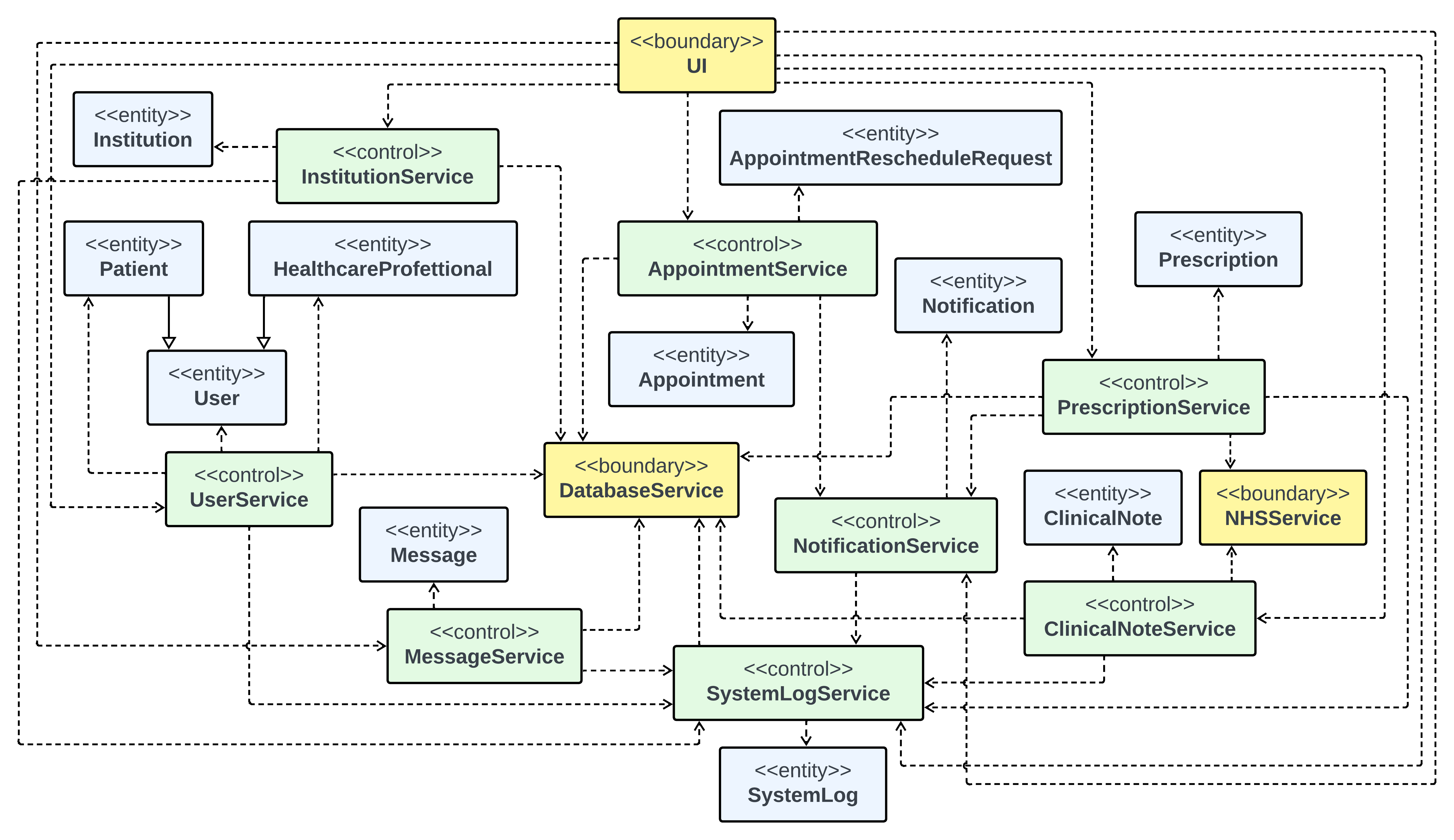
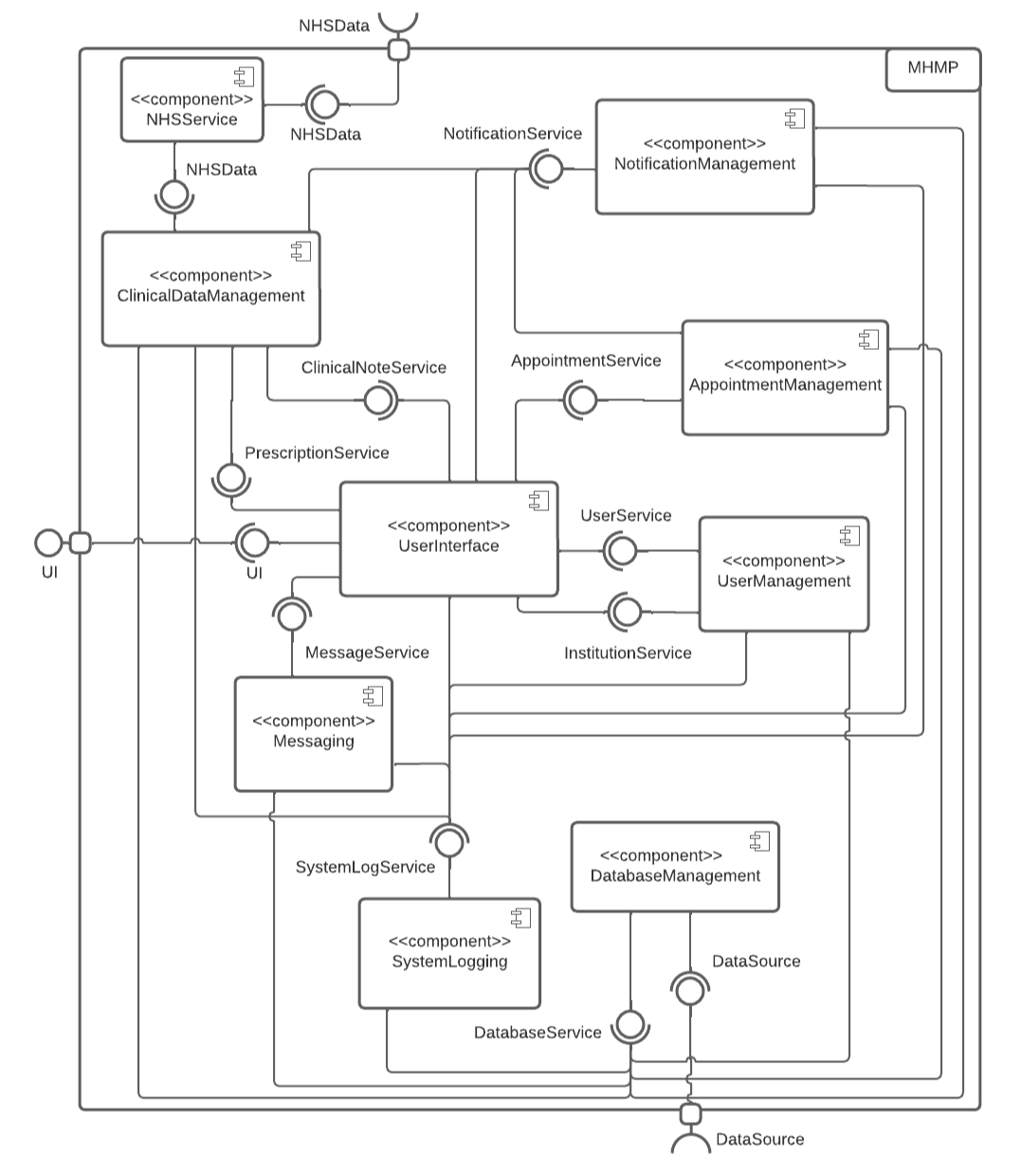
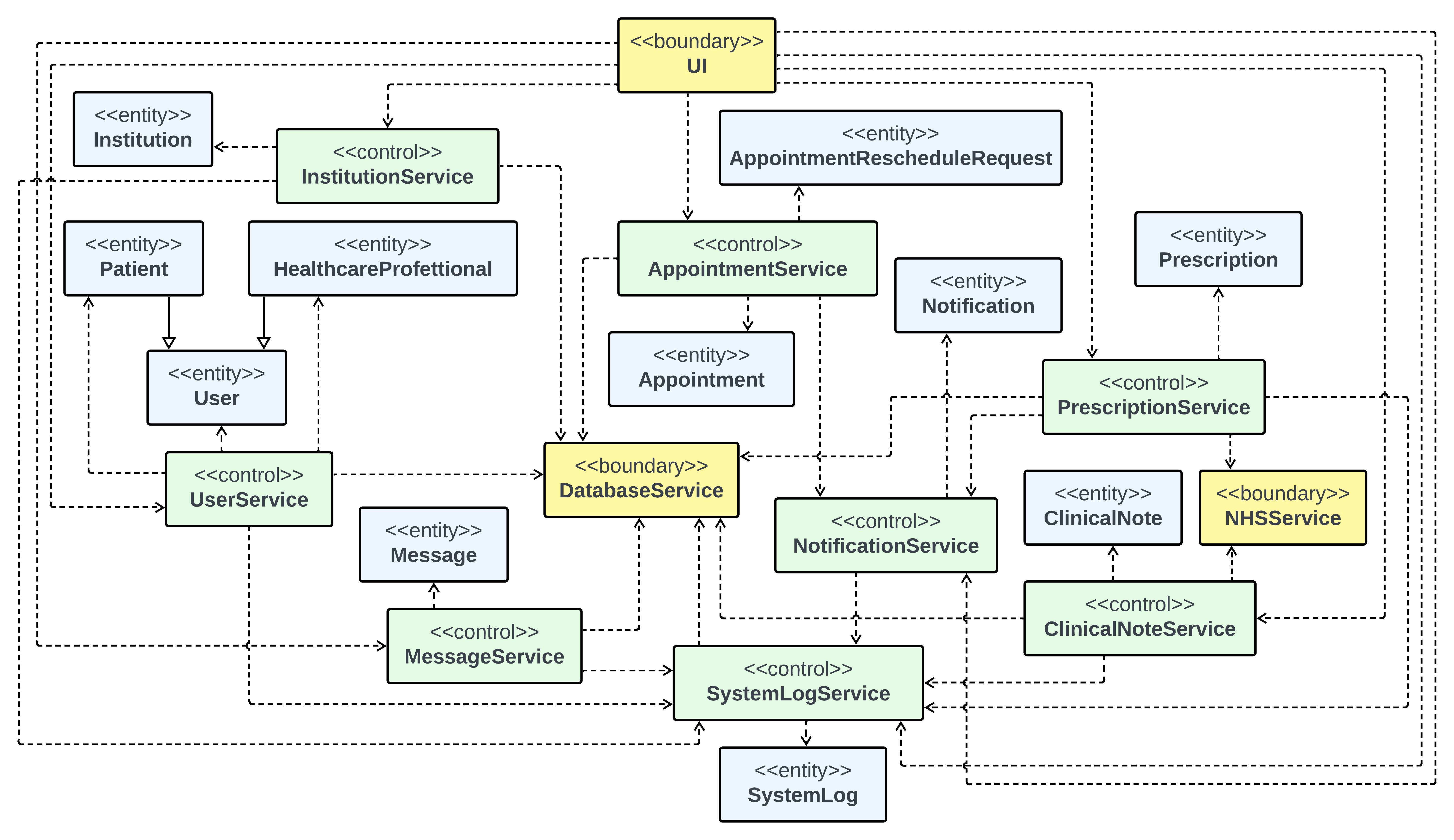
Domain Class DiagramDesign Class DiagramComponent DiagramDeployment DiagramState Machine Diagram - PrescriptionSequence Diagram - Update PrescriptionActivity Diagram - View Clinical Notes
1 / 7Object-Oriented Analysis class diagram showing the core domain entities and their relationships in the mental health management system.
Object-Oriented Design class diagram illustrating the system's implementation classes including services, controllers, and repositories.
UML Component diagram showing the high-level system architecture with interfaces between major subsystems.
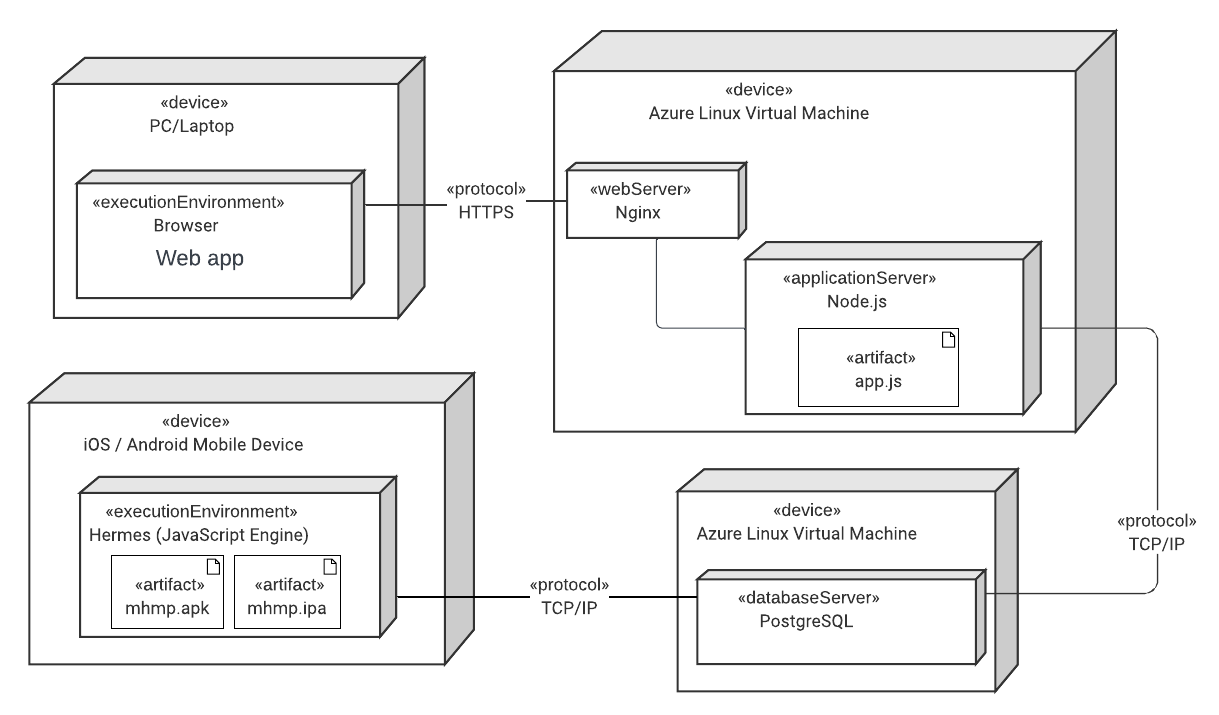
UML Deployment diagram illustrating the physical architecture and hardware/software deployment configuration.
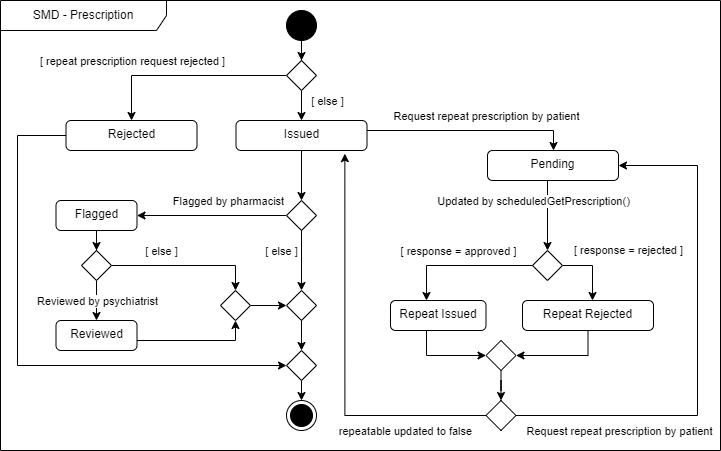
State Machine diagram modeling the lifecycle of a prescription entity from creation through to completion.
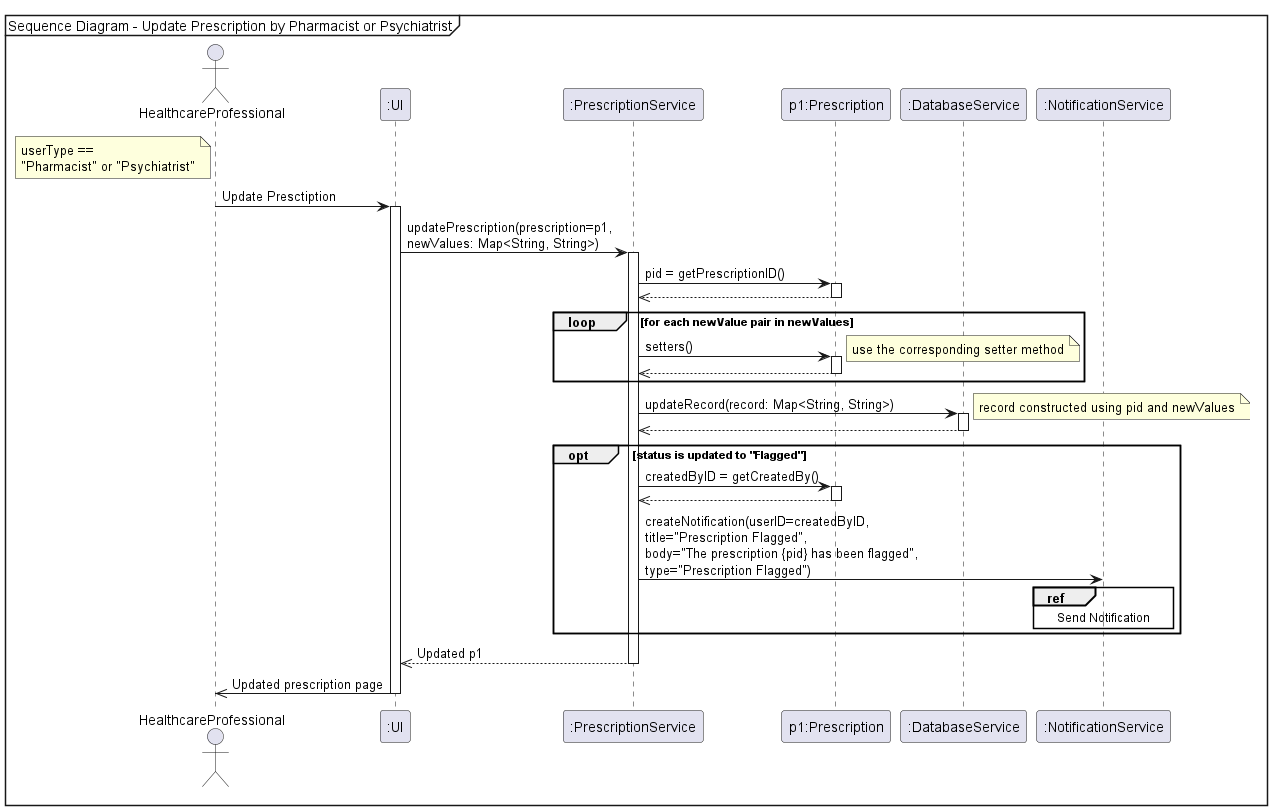
UML Sequence diagram showing the interactions between objects when updating a patient's prescription.
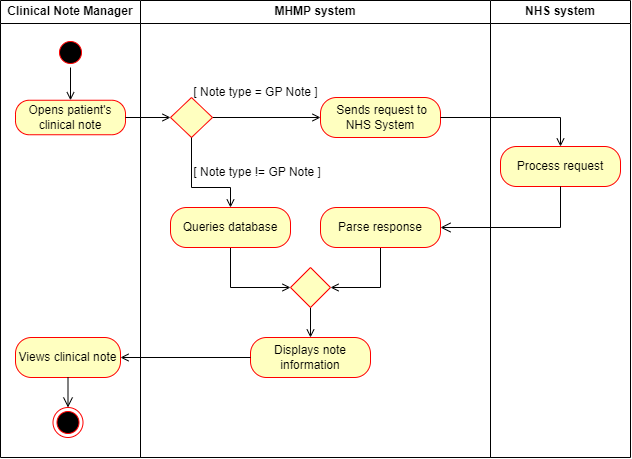
UML Activity diagram depicting the workflow for healthcare professionals accessing and reviewing patient clinical notes.
Project Demo
Key Technologies
Unified Modelling Language (UML)
Applied extensively for visualising system interactions through various diagrams, including use case, class, sequence, and activity diagrams to model complex healthcare workflows.
Object-Oriented Analysis & Design
Utilised OOA/OOD principles to create a robust, modular system architecture with well-defined components and interfaces that would support maintainability and future extensions.
Healthcare System Integration Design
Created theoretical integration points with NHS systems, designing APIs and data exchange protocols compliant with HL7 FHIR standards for healthcare data interoperability.
Security & Privacy by Design
Incorporated security and privacy considerations at the architectural level, ensuring compliance with GDPR and NHS Data Security.
MoSCoW Method
Applied for requirements prioritisation to effectively categorise system features based on stakeholder feedback and system constraints, ensuring the most critical needs would be addressed first.
Challenges & Solutions
Complex Domain Modelling
The mental healthcare domain involves intricate workflows and relationships between entities. Addressed by creating detailed domain models and consulting with domain experts including psychiatrists, therapists, and mental health nurses.
Multi-stakeholder Requirements Analysis
Balancing the diverse and sometimes competing needs of different stakeholders required careful requirements analysis and prioritisation techniques. Used surveys, interviews, and workshop sessions to gather comprehensive requirements.
NHS System Integration Planning
Designing for future interoperability with existing NHS systems required research into their APIs, data structures, and integration points. Created detailed integration specifications aligned with NHS Digital standards.
Ethical Considerations
Addressed the ethical implications of digitising sensitive mental health data by incorporating robust privacy controls, consent management, and audit trails while ensuring clinical effectiveness wasn't compromised.